-
-
Serving Palm Beach, FL 33480
Open 24 Hours / 7 Days
In Palm Beach, mold does not wait for a dramatic flood. A slow AC condensate leak, a roof drip after tropical rain, or damp carpet from a broken supply line can feed colonies within a few days. Humidity along the coast keeps materials moist longer than inland areas, which is why water events here turn into mold calls so often.
UAC Water Damage Palm Beach handles both the water and the mold that follows. This guide explains the timeline, the early warning signs in 33480 homes, and the actions that actually interrupt growth before it spreads behind cabinets and baseboards.
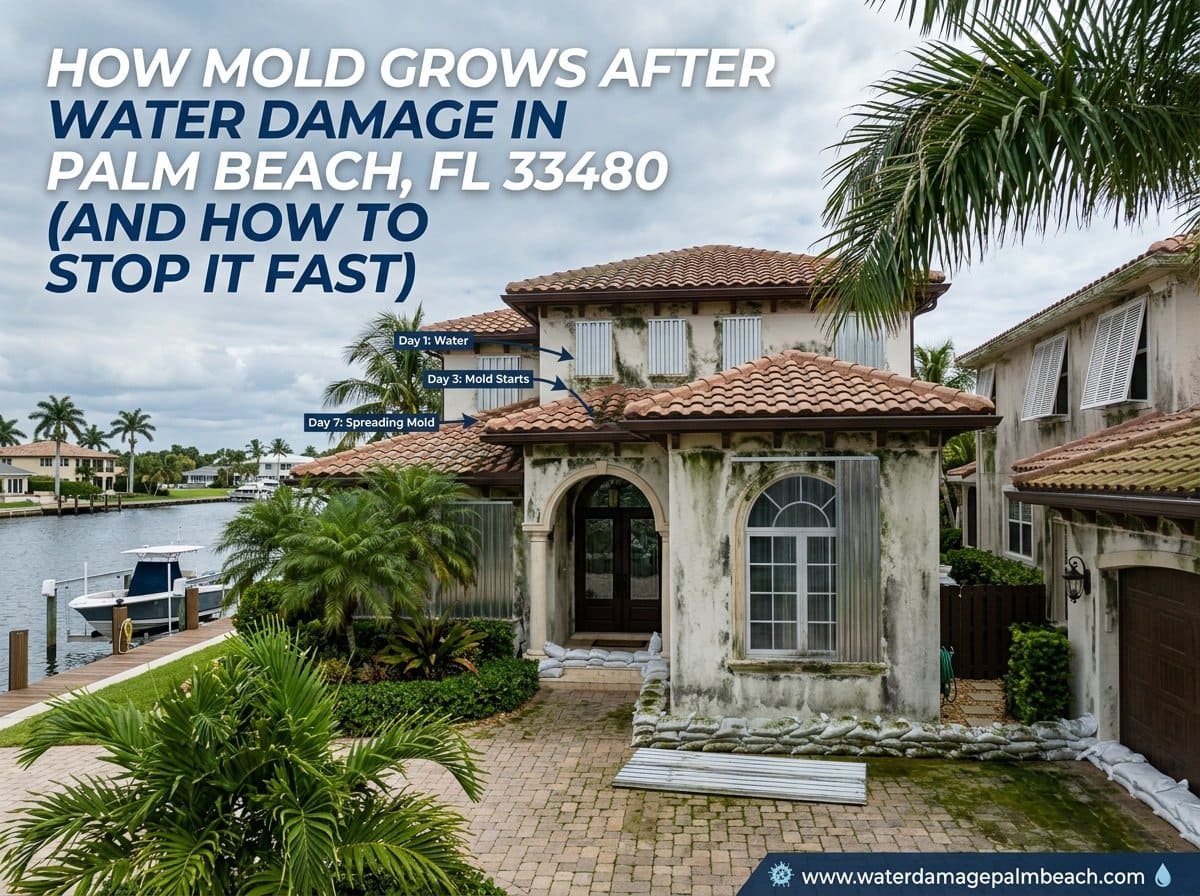
Mold spores are already in Florida air. They need moisture and a food source such as drywall paper, wood, dust, or fabric. When indoor relative humidity stays high and materials stay wet past about 24 to 48 hours, colonies can begin. Visible growth may show a little later, but the process starts earlier than most homeowners expect.
That is why professional drying after a leak is not optional decoration. Fans aimed at a wet carpet for an afternoon rarely dry the pad and subfloor. Moisture meters and controlled dehumidification are part of proper water damage restoration, and they are the first line of mold defense.
Roof leaks after wind-driven rain during hurricane season bands.
Supply line failures under sinks, behind toilets, and at washer hookups.
Storm or street water that entered through doors, vents, or low windows.
Hidden condensate or plumbing leaks that keep one wall damp for weeks.
Floodwater brings extra concerns because it may carry contaminants. In those jobs, cleaning and selective demolition often come before rebuild. See our flood restoration page for how contaminated water events are handled differently from clean supply leaks.
A persistent earthy or musty odor after a drying attempt is a red flag. Look for discoloration on baseboards, bubbling paint, warped closet flooring, and freezer-burn style spotting on drywall. Soft drywall that crumbles when pressed usually means the paper facing stayed wet too long.
Some residents notice more coughing, itchy eyes, or congestion in a specific bedroom or bathroom after a water event. Mold is not the only cause, but combined with known moisture it deserves a professional look. Do not grind spores into the air with aggressive DIY scrubbing on large growths.
Stop the water source. Remove standing water safely. Increase air movement only after you understand where moisture is hiding. Pull wet rugs and soft goods outdoors if they can be cleaned later. Keep HVAC filters clean so you are not circulating dust from damp zones through the house.
For anything beyond a tiny surface spot on non-porous material, call pros trained in containment and removal. Our mold remediation process focuses on isolating the work area, removing damaged materials when needed, cleaning remaining surfaces, and verifying moisture is under control before rebuild.
If water is still actively entering, if sewage or outdoor floodwater is involved, or if you see growth spreading across a wall cavity, treat it as urgent. Call (561) 767-4137 for 24/7 response in Palm Beach, FL 33480. Our emergency water damage team can stabilize the property first, then address mold risk with a clear plan.
Prevention during storm season still matters. Pair this article with our hurricane season water damage prevention guide, and keep the first 24 hours after a flood checklist handy for the next heavy rain event.
In humid South Florida conditions, mold can begin within about 24 to 48 hours on wet porous materials. Visible growth may appear later, so fast drying is critical.
Tiny spots on hard surfaces may be manageable, but larger growth, wall cavities, or contaminated floodwater need professional mold remediation with proper containment.
Call UAC Water Damage Palm Beach at (561) 767-4137. We handle emergency water removal and mold remediation throughout Palm Beach, FL 33480.